This guide explains how Multishop can help businesses coordinate multiple sales channels, align inventory and supplier workflows, and interpret pricing signals for steadier fulfillment. Background context is provided on the underlying concepts behind multichannel commerce, supplier sourcing, and operational controls, written objectively to support practical decision-making.
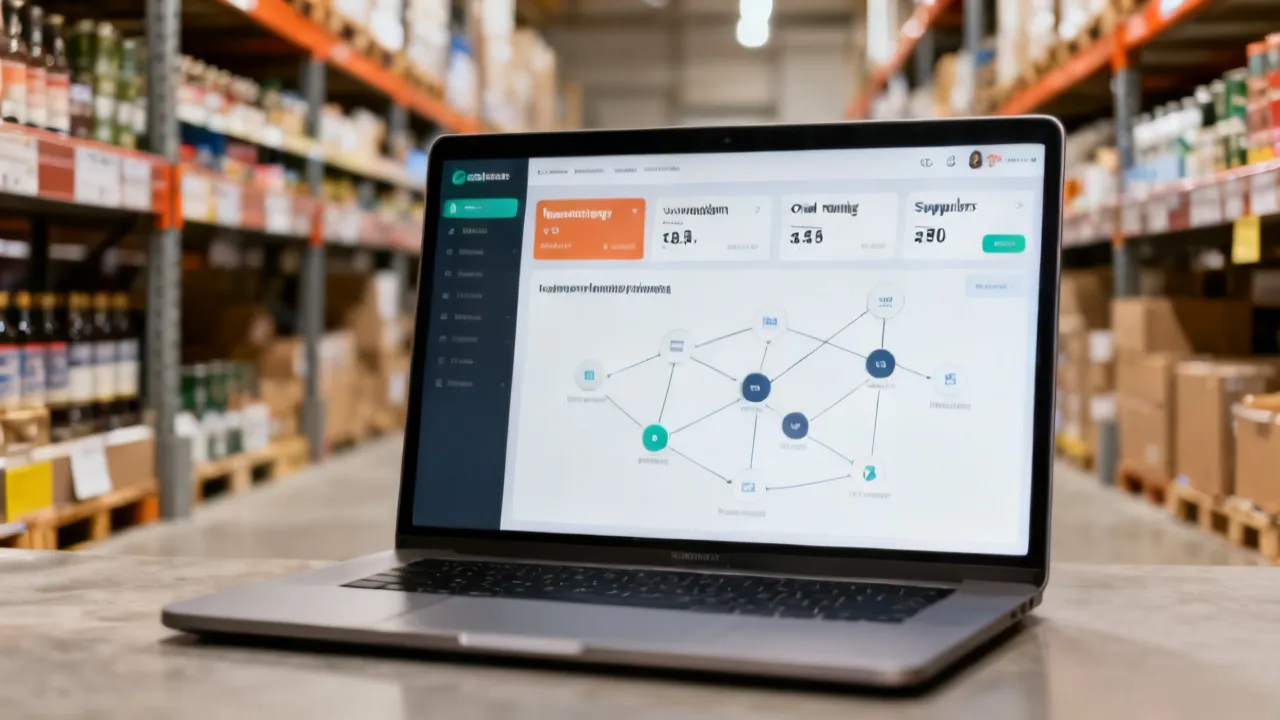
If you’re managing orders across multiple storefronts or marketplaces, Multishop is often best understood as an operations layer that helps unify how you source items, track stock, and route orders—so day-to-day decisions are grounded in consistent data rather than fragmented spreadsheets, channel-by-channel spreadsheets, or “tribal knowledge” in email threads.
In practice, teams look to Multishop-style workflows when they need to reduce avoidable issues such as overselling, mismatched stock visibility, inconsistent reorder timing, and slow handoffs between sales channels and procurement. The goal isn’t “more activity,” but more reliability: clearer inventory status, predictable supplier response, and pricing cues you can evaluate against your sell-through reality.
For supplier coordination specifically, Multishop becomes valuable when the business has to answer questions quickly and repeatedly—questions like: “Can we fulfill this SKU from the warehouse we think we can?” “If not, which supplier can ship the replacement fastest?” “What does this mean for next week’s purchase order?” When the operational answer relies on manual lookups and inconsistent data, mistakes become expensive. When the operational answer comes from a shared workflow, those mistakes become less likely and are caught earlier.
To make that tangible, consider how operations typically fail in multichannel environments. A customer places an order through Channel A. Channel A shows inventory availability because its feed is updated frequently. The order is routed to fulfillment. Later, procurement checks supplier availability and lead times; they find the expected replenishment window doesn’t align. Meanwhile, Channel B shows different stock levels because it has a lagging inventory update. Suddenly customer service fields calls: “Why does my order say ‘confirmed’ but it is delayed?” Or the fulfillment team sees a surprise cancellation reason: “Item is out of stock.” Each of these problems has a data root cause.
Multishop matters because it aims to remove those conflicting truths. It offers a structured way to connect inventory synchronization, order routing, and supplier workflows. When these components operate from the same underlying operational dataset, the business can plan and execute with less friction.
Across retail and e-commerce, the operational challenge is rarely the presence of many channels—it’s the lack of a shared operational truth. When channel A says stock is available while channel B shows “out of stock,” fulfillment quality drops. When purchase orders are created without a consistent supplier reference, lead times become harder to manage. When order statuses are not standardized across systems, returns and exceptions require manual interpretation.
Multishop-centered approaches generally focus on three capabilities:
While features differ by implementation, the guiding principle remains the same: unify the workflow so the business can act on the same dataset from inquiry to dispatch. This is critical because operational decisions are chained. A customer-facing promise (delivery timeline, availability, pricing) must be backed by warehouse reality and procurement constraints. If any link in the chain is based on outdated or inconsistent data, customer experience degrades and costs rise.
Data coherence is not just about “showing the same number.” It is also about aligning definitions. For example, one channel might define stock based on “available quantity” (after reserving for existing orders), while another might show “on-hand quantity.” Multishop attempts to reduce this by establishing a shared inventory model: which quantity is authoritative, when reservations occur, how and when updates are propagated.
Similarly, order and fulfillment routing isn’t only about transferring orders into a system—it’s about ensuring that downstream processes understand what those orders mean. A “paid” status in one channel may correspond to a different lifecycle state in another system. Multishop workflows typically standardize these statuses so fulfillment and procurement can operate predictably.
Finally, supplier workflows and sourcing references can be the missing piece in many “inventory integration” projects. Even if inventory is synchronized perfectly, operations still depends on supply. Multishop encourages structured supplier mappings so procurement actions are linked to the actual SKUs and the actual requirements emerging from orders. That linkage makes replenishment planning more accurate, reduces surprise shortages, and enables faster exception handling when something changes.
Teams often expect “pricing” to mean a single number in a single place. In operational systems, however, pricing frequently acts as a signal—a representation of supply constraints, demand pressure, channel strategy, and sometimes promotion or fee structures.
When evaluating pricing within a Multishop-style environment, a professional approach is to consider pricing as part of a broader operational context rather than as an isolated item.
When evaluating pricing within a Multishop-style environment, a professional approach is to consider:
Rather than treating price changes as isolated events, teams benefit from tracking pricing context alongside inventory health and fulfillment performance. This makes it easier to distinguish “temporary cost shift” (for example, a supplier surcharge for a limited window) from “structural supplier change” (such as a new pricing agreement or discontinuation).
Additionally, pricing governance is often where margin leakage occurs. Without governance, a system might automatically update sell price when a supplier price feed changes, even though the supplier price change could be temporary or should be offset differently depending on channel fee models. Multishop workflows can incorporate rules that prevent inappropriate automatic updates.
To illustrate: imagine your supplier updates purchase price daily. If you push that directly to marketplaces, your sell price might oscillate. Your competitors might interpret that as a promotional posture and shift customer demand unexpectedly. At the same time, your fulfillment team sees an increase in partial shipments because the replenishment schedule isn’t stable. The customer churn might increase due to inconsistent delivery or stock availability. The business attributes the problem to “pricing fluctuations,” but the deeper issue is that price updates were not evaluated alongside supply risk, inventory synchronization, and fulfillment feasibility.
In a well-designed Multishop workflow, the system doesn’t simply broadcast supplier pricing changes—it provides a governance layer. That layer ensures that pricing changes trigger review if the change is outside defined thresholds, if the supplier is experiencing delays, or if the channel margin model requires manual validation.
In short, pricing in Multishop workflows should be governed as a decision outcome—based on supply constraints, operational capacity, and channel economics—rather than as a purely technical mapping.
In supplier-facing workflows, “supplier details” typically refer to structured information such as supplier identifiers, fulfillment terms, lead-time expectations, and item-level sourcing rules. Even when a business uses multiple suppliers, a Multishop-like system can help ensure procurement decisions map to what the sales channels actually require.
From an industry standpoint, the very valuable supplier data is not merely descriptive; it is actionable. The system should enable you to:
This is where operational discipline matters. Strong supplier references can prevent a common failure mode: sales continues to advertise availability, while procurement relies on vague assumptions about replenishment timing. Even if your inventory feed is accurate today, operational reality can change quickly. Suppliers might experience production delays, transit delays, or stock allocation constraints. When supplier details are weak—missing lead time ranges, missing SKU mappings, or missing substitution policies—the system cannot effectively anticipate those changes.
Supplier details also matter because they impact cost, delivery commitments, and customer experience. Lead-time variance, for example, is not just a procurement problem. It shapes delivery promises to customers. If your channel promises a two-to-three day delivery window but supplier lead time is unstable, you will create fulfillment exceptions. Multishop workflows can incorporate lead time assumptions and align delivery estimates accordingly.
Supplier details can also help reduce “ghost demand” and “ghost stock.” Ghost demand happens when the business expects replenishment to cover future sales, but supplier realities don’t support that. Ghost stock happens when stock is shown as available because the system believes a supplier will replenish soon (or because SKU mappings are duplicated). Both issues can be traced to incomplete or inaccurate supplier records.
To improve supplier detail quality, many teams implement practices like:
When supplier details are implemented with these considerations, the workflow becomes a dependable foundation for both replenishment planning and customer-facing accuracy.
Multishop-style tools tend to produce the top outcomes when the business can support clean workflows and clear accountability. Before rollout, confirm the following requirements and conditions:
Without these foundations, any multichannel “connector” can still leave teams with manual reconciliation work, which defeats the purpose. It is common for organizations to underestimate how much operational clarity is required for technology to succeed. Systems can only automate what is defined. If the business hasn’t standardized definitions and ownership boundaries, automation may amplify inconsistencies.
To expand on these requirements:
SKU and product data quality means not only that items exist in the system, but that their relationships are correct. For variants, the system needs to know how size and color map to unique identifiers. For unit measures, the system needs to know whether inventory is tracked per unit, per pack, or per case. A small mismatch can distort reorder quantities and availability calculations.
Inventory ownership model clarifies where the business believes inventory is “real.” For example, some businesses treat the warehouse management system as the source of truth; others treat the accounting system. But if multiple systems are updated independently, you can end up with conflicts. Multishop workflows rely on consistent ownership so that inventory updates are propagated coherently.
Supplier master data readiness includes not just supplier names and IDs, but also supplier-to-SKU mapping quality and lead-time reliability. If lead times are unknown or wildly variable without tracking, the system cannot calculate reorder points effectively. In these cases, you may need to implement a measurement period before full automation.
Order status definitions ensure that operational states are interpreted correctly. If one channel marks an order as “cancelled” but another system expects a different status code, exceptions can slip through. Multishop workflows should standardize these lifecycle states and map them to internal fulfillment steps.
Operational escalation rules define how the business responds when something doesn’t match the expected flow. If your workflow is “happy path only,” it will fail when supply delays or partial shipments occur. Escalation rules allow the workflow to remain trustworthy under stress.
When businesses operate in logistics ecosystems near major cities, they often develop informal norms—such as how customers expect delivery speed, how weekend ordering behaves, and how returns are handled. In localized contexts (often described as nearby in multi-region planning), the operational reality is that courier pickup schedules, warehouse cutoff times, and regional demand seasonality all influence what “good inventory coverage” means.
For teams serving customers in nearby regions, the key operational question is: can your system reflect the delivery timeline customers assume? A Multishop-style setup should therefore be evaluated against your real dispatch cadence and supplier lead-time patterns, not against generic product descriptions.
Localization also affects availability promises. Suppose your national logic assumes that shipments dispatch daily. If a nearby region only has courier pickups on specific days (for example, Tuesday and Thursday), delivery estimates become wrong for orders placed on other days. Multishop workflows can address this if they incorporate regional dispatch schedules and fulfillment cutoff times into delivery estimates and order routing rules.
Furthermore, returns are localized operations. Return shipping labels, processing turnaround times, and inventory re-instatement rules can vary by region due to differences in carrier contracts or warehouse receiving schedules. If multichannel inventory synchronization does not incorporate return cycles, you can temporarily show stock as unavailable or available incorrectly—leading to lost sales or fulfillment exceptions. A well-designed Multishop workflow should define how returns update inventory and how quickly returned items become sellable again.
Localization can also influence supplier coordination. Suppliers may deliver to different distribution centers, and lead times might differ by route or freight method. In some cases, your “preferred supplier” for one region might be a different supplier for another region, even for the same SKU. Supplier details and sourcing rules should therefore be region-aware when necessary.
In short, localization isn’t a cosmetic configuration—it directly changes customer expectations and operational feasibility. For nearby regional teams, the most important outcome is usually alignment between system promises and real-world delivery behavior.
| Approach | Top for | Main benefit | Key risk if underprepared |
|---|---|---|---|
| Channel-first integration | Teams primarily trying to unify storefront visibility | Faster channel consolidation | Inventory and supplier workflows remain inconsistent |
| Inventory & sourcing-first configuration | Businesses with multiple suppliers and frequent replenishment needs | More stable availability accuracy | Poor SKU mapping can create “phantom” stock |
| Fulfillment-rules-first setup | Organizations with complex shipping rules or multiple fulfillment locations | Reduced order exceptions | Status definitions not standardized across systems |
| Pricing-signal governance | Companies managing promotions, channel fees, and cost volatility | More informed margin control | Price updates without cost context can erode margins |
These approaches can also be combined, but the sequence matters. For example, channel-first integration can quickly remove visibility gaps, but if inventory synchronization and supplier workflows are not established, you might simply propagate incorrect availability more widely. Conversely, inventory and sourcing-first configuration might take longer to integrate, but it establishes a reliable foundation for both availability and replenishment.
Fulfillment-rules-first setup tends to reduce exceptions when you have complex shipping constraints. But it depends on standardized order status definitions and reliable inventory reservation logic—otherwise the workflow will still produce “exceptions,” just of a different type.
Pricing-signal governance is often essential when cost inputs vary or when promotions create demand spikes. Pricing governance becomes more accurate when it references inventory state and supplier lead-time patterns, not just supplier price lists.
Choosing an implementation path is therefore a strategic decision. It should be shaped by your current bottleneck: availability accuracy, fulfillment complexity, supplier variability, or pricing governance.
The following step-by-step approach reflects how experienced operations and commerce teams minimize disruption and ensure data integrity. Adjust details to your environment, but keep the sequence and verification mindset.
Decide which system is authoritative for stock, product data, and order status. Many issues appear when different teams treat different systems as “truth.” Define it clearly and document it so exceptions can be resolved without debate.
For example, if the warehouse management system is the stock source of truth, then your inventory synchronization layer must respect reservation status from that system. If your accounting system is the stock source of truth, it may update later than operational fulfillment states, which can create visible discrepancies for short time windows.
Validate that each SKU maps correctly across channels and suppliers. Pay attention to unit sizes, pack counts, and barcode/identifier consistency.
This step is often underestimated. A mapping that “mostly works” can be worse than no integration, because it can create subtle inventory misalignment that only becomes obvious during peak ordering periods.
Consider implementing a mapping validation routine that checks for:
When integrating marketplaces or storefronts, confirm how order status changes will be reflected back into the system for accurate downstream workflows.
For instance, decide what internal status triggers:
Without these definitions, you can end up with orders stuck in limbo or customers receiving contradictory order updates.
Create supplier item mappings, define replenishment lead-time expectations, and set rules for substitutions or partial fulfillment if applicable.
Include lead-time variance where possible. If your supplier lead times are usually 5–7 days rather than always 6 days, your workflow should reflect a range or a statistical buffer. This improves reorder accuracy and reduces stockouts.
Also define substitution policy. If substitutions are allowed, specify which attributes can change (e.g., color) and which cannot (e.g., size). If substitutions are not allowed, ensure the workflow triggers backorder and communicates it properly to channels.
Set reorder points based on lead time and demand patterns. The aim is to prevent stockouts without keeping excessive inventory.
To do this responsibly, many teams use a demand forecast or historical sales velocity per SKU, then combine it with lead-time expectations and safety stock. Even a simple model improves accuracy compared to static reorder points.
Be careful about seasonal spikes. If you sell more during holidays, reorder logic should incorporate those patterns or increase buffers temporarily.
Establish how pricing updates occur—manually for sensitive categories or automatically where safe. Pair pricing changes with cost and supplier availability context.
For example, if supplier price increases by 8% but supplier lead time also increases and inventory coverage is low, you may want to require manual review before updating marketplace pricing. Conversely, if cost changes are minor and stock coverage is high, automatic updates may be acceptable.
Governance can include:
Start with a limited set of SKUs or one channel. Track how inventory accuracy and fulfillment outcomes behave in real ordering conditions.
The pilot should also test the “not ideal” scenarios: cancellations, partial shipments, inventory corrections, and supplier delays. Waiting for those events to happen naturally can leave you with a half-integrated system that can’t gracefully handle exceptions.
Document what to do when supplier lead times shift, shipments delay, or pricing changes outside expected thresholds.
Exception playbooks are what keep the system trustworthy when reality diverges from assumptions. Good playbooks specify:
Use metrics like order cancellation rate due to stock mismatch, fulfillment turnaround time, and return rates. Evaluate improvement against a baseline.
KPI selection matters. Don’t rely only on “system metrics” like feed status codes. Tie your KPIs to customer outcomes and operational costs.
Even a well configured Multishop-like system can underperform if operational conditions are unstable. Common requirements include:
To make these conditions more actionable, consider the day-to-day realities of operations:
Consistent data maintenance means you need a routine. Product catalogs change; suppliers discontinue items; new variants are introduced. Without scheduled QA and a reliable update pipeline, inventory synchronization becomes a constant patchwork. A disciplined data maintenance cadence helps reduce the long-tail of errors that accumulate.
Clear responsibility boundaries means the system should not become a black box where nobody knows who to ask. When something breaks—inventory mismatch, order routing error, supplier mapping issue—your teams need to know what “owner” handles the fix. That ownership should be consistent with your source-of-truth definitions.
Training for customer-service scenarios ensures that frontline teams can interpret what the system means. For instance, they should understand the difference between “backordered,” “out of stock,” “cancelled,” and “inventory pending update.” If customer service communicates incorrectly, customers perceive the business as unreliable even if the system is functioning correctly.
Change management is critical. Supplier onboarding and SKU migrations often involve updating mappings and lead-time assumptions. These are high-risk moments. Many teams implement a “freeze window” where changes are limited during peak ordering. Or they schedule changes during low-traffic periods and monitor exceptions closely.
Operational steadiness is therefore a blend of system configuration, process discipline, and human clarity.
From an industry expert’s point of view, the earliest value from Multishop workflows usually shows up in operational consistency rather than in flashy dashboards. The first measurable wins are often:
Over time, businesses can leverage the unified dataset to refine pricing governance, optimize reorder timing, and improve supplier performance discussions using shared reference points.
But experts also caution that early wins can be misleading if you don’t measure the right things. For example, you might see fewer cancellations, but if delivery times worsen because supplier lead times were not integrated properly, you might later see an increase in returns or customer support volume. The key is to track the operational chain end-to-end.
In high-performing implementations, teams establish an “exception visibility” mindset. Rather than viewing exceptions as failures, they treat exceptions as signals that help improve the workflow. With a Multishop approach, exceptions can be logged with structured reasons—like “supplier delayed,” “mapping missing,” “pack size mismatch,” or “pricing threshold triggered.” This structured approach supports continuous improvement.
Another expert note: early value often comes from removing manual re-entry and reducing duplicated logic. When teams stop maintaining separate spreadsheets per channel, operations become faster and more accurate. The unified workflow reduces errors and helps teams scale without multiplying headcount in operations.
In summary, experts usually expect Multishop to deliver value through operational reliability first, then through optimization and governance improvements as the workflow matures.
Professional implementations focus on preventing predictable failure modes. Common pitfalls include:
To expand on these pitfalls:
Over-automation without exception rules is a major risk because automation tends to be trusted once it “works” in the initial pilot. But suppliers and logistics rarely behave consistently. If the workflow doesn’t have alert thresholds and review triggers, it might continue to promise availability even when the pipeline is unstable. The result can be a surge of cancellations and customer support escalations.
Ignoring pack size and unit conversion can create severe discrepancies. For example, a supplier might list inventory by case, while your warehouse tracks inventory by unit. If the system assumes a 1:1 conversion, reorder quantities will be wrong and stockouts or overstock may occur. Pack size and unit conversion should be validated and tested with real examples.
Unverified product feeds can introduce duplicates or mismatched variants. A duplicate SKU might cause two separate inventory records to exist for what should be a single product. Variants can also break availability if the system treats “size 10” and “size 10 regular” as different items inconsistently. A good workflow includes feed validation steps and QA checks that compare incoming catalog data against an expected structure.
Pricing changes without margin context erodes profitability and can also affect demand. If price updates happen without accounting for channel fees, promotion eligibility, and cost-to-serve changes, you might inadvertently underprice or overprice items. Underpricing harms margin, while overpricing can reduce sell-through and cause inventory accumulation.
Beyond the list above, teams also commonly encounter pitfalls like:
The most effective teams treat pitfalls as learnings. They implement checks, monitoring, and escalation to reduce recurrence.
In global commerce, multichannel selling increases the complexity of stock control and order fulfillment. Many operational studies and industry commentaries emphasize that inventory accuracy and order fulfillment reliability directly affect customer experience, repeat purchase behavior, and overall cost-to-serve.
Relevant, widely cited frameworks include the general logistics and supply chain principles promoted by major industry bodies. For example, the International Federation of Accountants (IFAC) and supply chain reporting guidance from organizations such as the World Economic Forum frequently highlight the operational importance of reliable process control and data integrity. Additionally, research and industry reporting by Gartner (for supply chain and commerce operations trends) and analyses published in channels aligned with retail operations discuss the costs of fulfillment exceptions and the operational impact of inventory inaccuracy. (These sources provide directional support for the importance of the underlying themes; exact performance figures should be evaluated based on your own baseline and pilot results.)
What makes these concerns so persistent is that multichannel commerce is essentially a distributed system. Your customer-facing promise is generated in one place, but fulfillment is executed across warehouses, carriers, and suppliers. Without integrated data, each subsystem makes local decisions that may conflict with the decisions made by other subsystems.
Inventory accuracy is therefore not just a metric—it is a control mechanism. When inventory is accurate, the business can reliably promise delivery windows, reduce cancellation rates, reduce labor spent on manual correction, and optimize purchasing schedules. When inventory is inaccurate, those issues compound: customer expectations are violated, suppliers are contacted under pressure, and operational time gets spent on crisis response rather than planning.
Moreover, inventory inaccuracies have second-order effects. For example:
Multishop workflows aim to reduce these second-order effects by aligning inventory synchronization, supplier details, and order routing into coherent operational logic. When implemented well, they provide a framework for consistent decision-making. When implemented poorly (for example, with weak master data or unclear ownership), they may propagate inaccuracies more widely across channels.
Thus, the industry background is not only about “importance,” but about the mechanism: multichannel and inventory accuracy remain core concerns because they reduce the risk of conflicting operational truths and allow reliable end-to-end fulfillment.
Multishop is commonly used to describe an operational approach or platform capability that coordinates multiple sales channels with unified inventory and supplier workflows, helping teams manage orders, stock visibility, and procurement references more consistently.
In practical terms, it typically means that when an order arrives from any connected channel, your fulfillment and procurement logic can interpret that order correctly, verify availability using consistent inventory rules, and apply supplier sourcing references to maintain replenishment continuity.
Treat price as a contextual signal. Evaluate it alongside supplier availability, lead time expectations, and channel differences. Establish governance rules for when pricing updates are automatic versus reviewed manually.
Instead of asking “what is the latest price?” ask “what operational conditions does this price reflect?” That mindset reduces margin surprises and prevents uncontrolled oscillations that can confuse customers and distort demand.
Supplier details matter very when they are actionable—mapped to SKUs, linked to lead-time expectations, and connected to replenishment and exception handling. Incomplete or outdated supplier mappings are a frequent cause of fulfillment failures.
They also matter when you have multiple suppliers, substitution rules, and regional fulfillment complexities. In those cases, supplier details determine whether replenishment planning is feasible and whether the system can switch sources without breaking availability promises.
Not necessarily. Start with a controlled pilot that validates SKU mappings, inventory synchronization logic, and order status flows. Complexity should grow only after the baseline workflow is stable.
A gradual rollout helps you learn where your data quality is weakest, which reduces rework later. It also gives operations time to develop exception playbooks and training routines.
High-quality SKU and variant data, clear identification of the inventory source of truth, consistent update routines, and standardized order status definitions. Without these, synchronized views can become misleading.
Additionally, inventory visibility depends on reservation logic (how stock is allocated to pending orders). If reservation is not considered, channels can still oversell during high-demand periods even if inventory numbers match in theory.
Track inventory mismatch-related order cancellations, fulfillment turnaround time, exception counts (such as backorders or partial shipments), and customer service escalations tied to stock or shipping inconsistencies.
Also monitor data-level issues such as feed errors, mapping mismatches, and late supplier updates. Operational metrics can hide data problems until they surface as exceptions, so it helps to monitor both layers.
Yes, but only if your system reflects real dispatch cutoffs, courier pickup schedules, and supplier lead-time variability that affects delivery windows for customers in nearby areas.
This usually requires region-aware routing rules and accurate delivery estimation logic, not just the same product catalog everywhere.
Document exception playbooks, standardize statuses, and refine reorder thresholds. The aim is to convert manual “data fixing” into guided decision rules, supported by accurate master data.
Another effective approach is to implement feedback loops: when operations manually correct an issue, log it with a structured reason so the workflow can be improved systematically.
Use governance rules and exception handling: alert thresholds, review workflows for pricing or availability, and updated reorder calculations. The system should make deviations visible, not hide them.
If lead times change often, your workflow may need to shift from fixed lead-time assumptions to a more adaptive model (for example, tracking historical lead-time distributions and applying safety stock buffers).
No. The top approach depends on your primary pain point—inventory accuracy, fulfillment complexity, supplier variability, or pricing governance. Many organizations succeed by starting with inventory & sourcing-first and then expanding to pricing-signal governance.
Often, the best path is not a single approach but a phased combination where each phase establishes a reliable foundation before adding another layer of complexity.
When implemented with disciplined data preparation and clear operational requirements, Multishop can become a practical foundation for multichannel stability. The very durable benefit comes from aligning inventory synchronization, supplier details, and price governance into a coherent set of workflows—so your business can respond to real demand with fewer exceptions and more predictable fulfillment.
As you move forward, focus on controlled pilots, robust exception handling, and measurable operational outcomes. That approach turns multichannel complexity into manageable operational certainty—especially when coordinating procurement, pricing information, and availability across many selling surfaces.
Ultimately, “trustworthy operations” is the result of multiple elements working together: clean master data, consistent workflow definitions, reliable synchronization logic, actionable supplier references, and governance rules that prevent inappropriate automation. When these elements are in place, Multishop isn’t just an integration—it becomes a foundation for operational consistency that supports growth without sacrificing customer experience.
Striking the Perfect Balance: Navigating Premiums and Out-of-Pocket Expenses in Senior Insurance Plans

Explore the Tranquil Bliss of Idyllic Rural Retreats

How to Make Lasting Memories at Disneyland Attractions

Affordable Phones and Plans for Seniors

Affordable Full Mouth Dental Implants Near You

Unlock the Top Kept Secrets to Finding Your Ideal Dentist for Flawless Dental Implant Results!

Discovering Springdale Estates

Unveiling RS Sul Telecom Services

The Guide to Car Trading

Navigating Paylane.com Payment Solutions
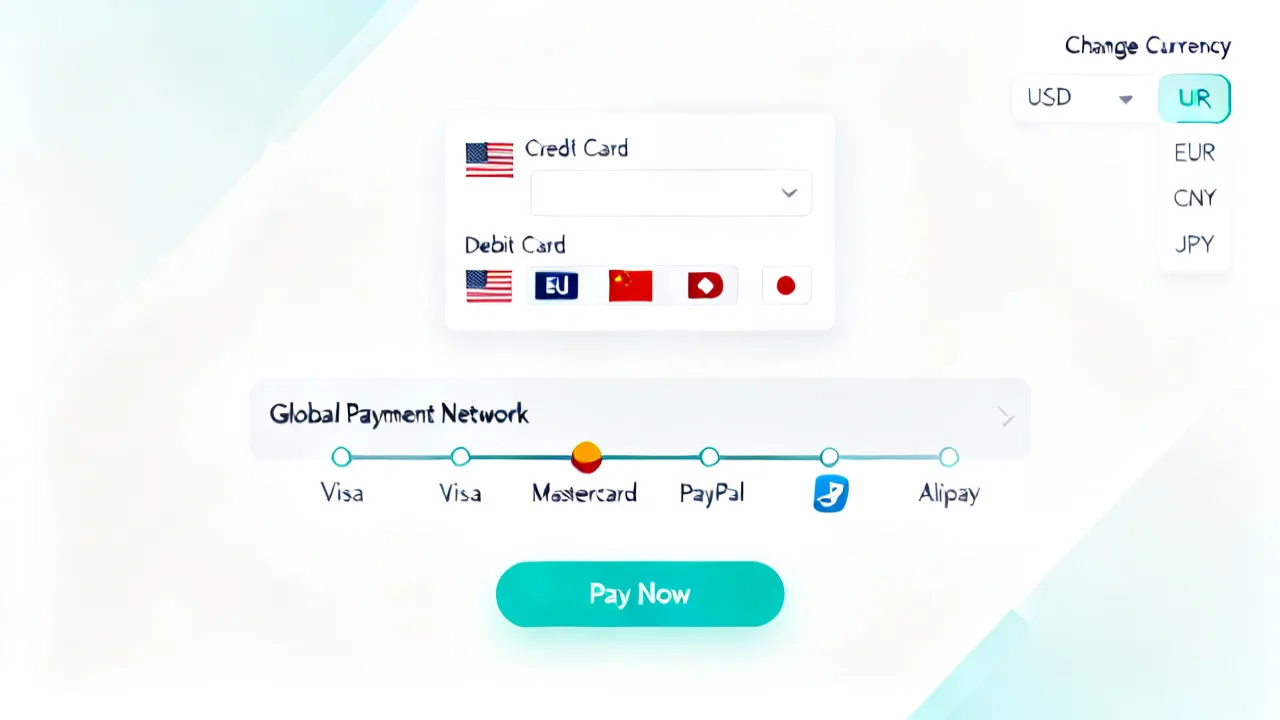
This guide explores the comprehensive suite of payment solutions offered by Paylane.com, focusing on their application in e-commerce and digital transactions. Paylane.com is a merchant services company that specializes in enabling businesses to process online payments efficiently. With a focus on security and adaptability, it caters to various global markets by providing tailored payment solutions.

Enhancing Business with Vtex and Salesforce
This article delves into the strategic utilization of Vtex and Salesforce in modern business operations. Vtex, known for its robust e-commerce ecosystem, and Salesforce, the paramount CRM platform, together offer an unparalleled synergy for digital commerce and customer relationship management, facilitating an integrated approach to enhance business efficiency and customer satisfaction.

Enhancing Retail with Vtex Store
Vtex Store provides a sophisticated e-commerce platform with features essential for modern retail. As a leader in the industry, it offers solutions that integrate seamlessly with business operations, enhancing both customer engagement and sales efficiency. This article explores the intricate dynamics of Vtex Store, providing insight for businesses aiming to elevate their digital footprint.

Leveraging Klaviyo Woocommerce for E-commerce Success
The integration of Klaviyo with WooCommerce presents a powerful opportunity for e-commerce businesses aiming to enhance their marketing strategies. Klaviyo, a leading email marketing platform, complements WooCommerce's robust e-commerce functionalities, creating a seamless channel for businesses to manage customer relationships and drive sales effectively. Discover how this dynamic duo can transform your e-commerce approach.

Mastering eCommerce with Vtex and Salesforce
This article delves into the powerful combination of Vtex and Salesforce in modern eCommerce, highlighting their roles in revolutionizing online business infrastructure. Vtex, a cloud-based platform, and Salesforce, known for customer relationship management, together provide an integrated solution for holistic business growth and enhanced customer experiences.
Mastering eCommerce with Vtex and Salesforce
This article delves into the powerful combination of Vtex and Salesforce in modern eCommerce, highlighting their roles in revolutionizing online business infrastructure. Vtex, a cloud-based platform, and Salesforce, known for customer relationship management, together provide an integrated solution for holistic business growth and enhanced customer experiences.
